- The Wuthering Cephalopod
- Posts
- Happy Holidays and Nevill
Happy Holidays and Nevill
We're Effing Done! Sort of.

JENNIFER Childs
December 05, 2025
It’s the holiday season! Since the pandemic, it’s always been a low-key time for us. I don’t have any family in the area, my partner only has his parents, and my roommate is estranged from his MAGA family. I spend it finishing up my gifts, trying to survive the heat death my partner needs in the home office, and imagining how cool my house would look if I had energy. | 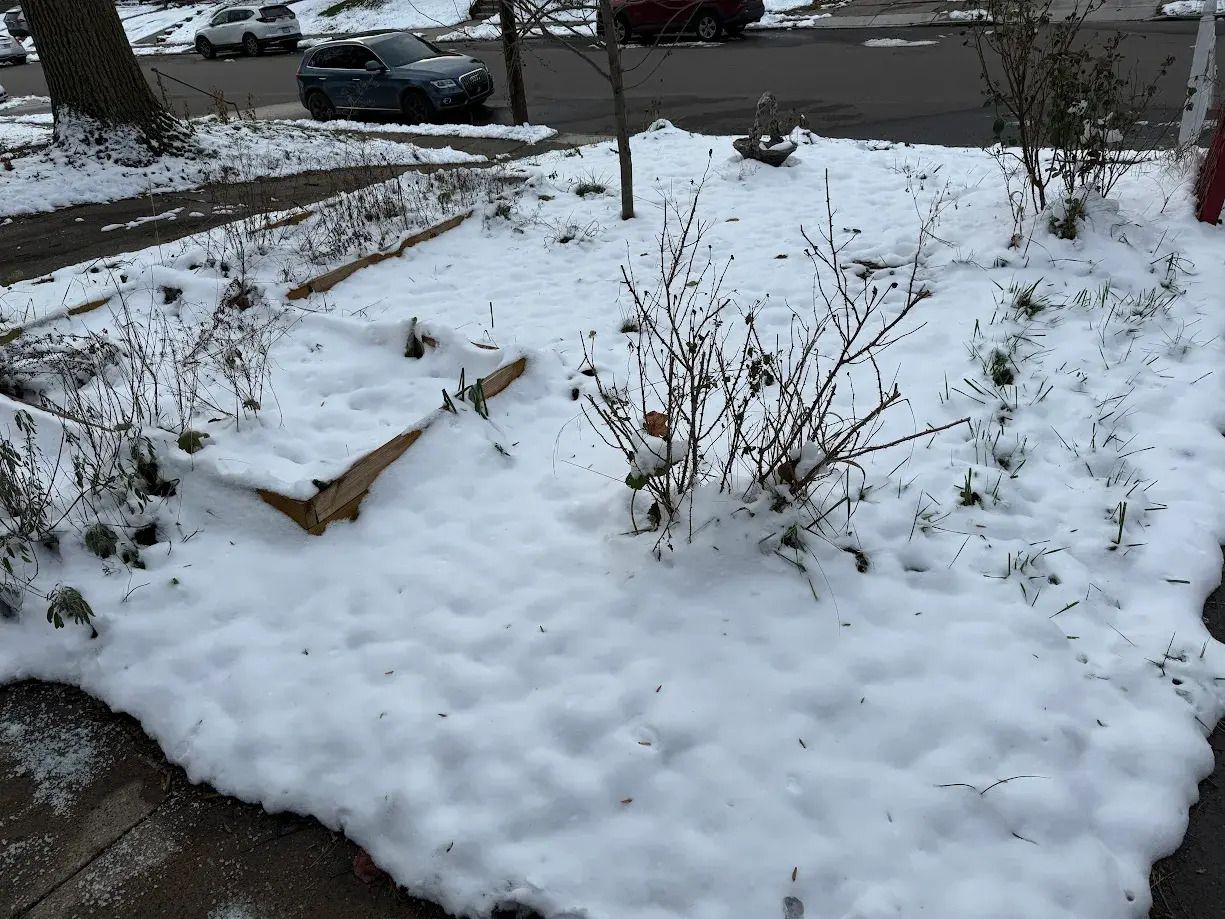 Snow days are weird when you no longer worry about school. |
This is the last of the Nevill reviews! I’ve covered his entire bibliography, so it’s time for him to publish three more things I won’t see for a few years. Since Fear Street died in a fiery crash of apathy, I’m proud I read all of it and even happier I documented it. I mean, Fuck.
After this, I’ll be moving to a different format and publishing reviews on StoryGraph and Good Reads. The goal is routine and documentation. God knows if I’ll manage it.
Before You Wake
“The Angels of London”: 4. Frank moved to London and took the first room and first job he came across. The latter means he can barely afford the former, and it’s a hellhole that’s falling apart and barely worth the 100 quid he pays a week. However, his landlord doesn’t care and wants more money for his “family.” Franks tells him to go fuck himself, and he’s moving out. After an ominous warning from his housemate about how people don’t leave The Angel and Frank should just pay the uptick in rent, he finds out what exactly lives in the attic apartment with his landlord. And collecting the rent is a messy affair.
| 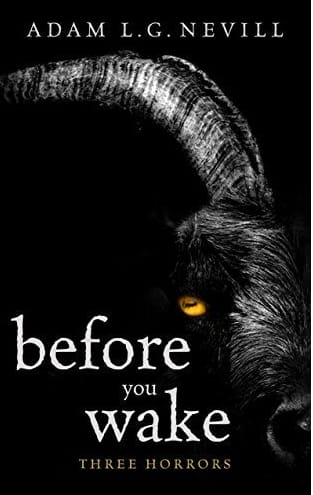 |
“Hippocampus”: 4. The eeriest tale of the lot, it describes a not-so-empty freighter ship that happened across something ancient and terrifying that was also ancient and terrifying to the crew… oh, and of course it’s drifting toward land. “Ghost Ship” vibes + weird Neville lost to history old gods.
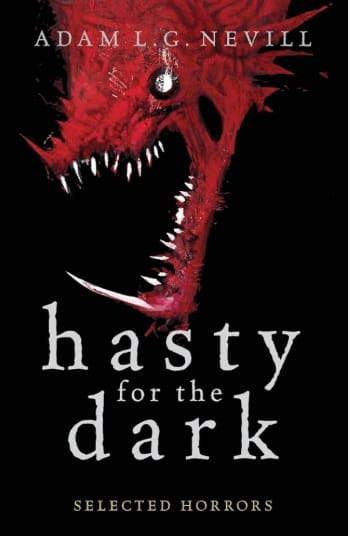
Hasty for the Dark
“On All London Underground Lines”: 3.5. Purgatory is London mass transit, as the narrator goes from platform to platform in order to try to catch a train. In a hurry, they always manage to get into the longest line, along the way meeting the odd characters that share their fate of never being able to get on the train. Lines = extreme discomfort for me.
“The Angels of London”: 4. See above. In the author’s notes, he explains it’s inspired by the Angel of Islington and the desperation we live in when we’re young and broke.
“Always in Our Hearts”: 3.5. See above. Nevill turned his anxiety about a new baby and driving in a new city into revenge tale + nasty critters.
“Eumenides (The Benevolent Ladies)”: 4. Men, do not follow your dicks. It’s just going to get you eaten or sacrificed by someone you reduced to great legs, a round ass, and good tits. Jason finds this out the hard way, as his office crush invites him to an abandoned zoo (all the animals were poisoned by a “cult”) and actual hell breaks loose. Nevill addresses how he believes enigma is vital to horror, so that’s the explanation for his writing style. I don’t disagree with the concept, just some of the execution. Everything has a history, motivations, desires, and reasons.
“The Days of Our Lives”: 3. Men, once again, your dicks are leading you into terrible situations. The narrator mistakenly receives a package meant for another, which leads him to Lois and her involvement in The Movement. She’s probably banging an eldritch being, but what she’s not doing while all dressed up in her dommie mommy boots and stockings is the narrator: her husband. She is beating the shit out of him emotionally and physically though. Or is she?
|  |
“Call the Name”: 3. The first part of this story is a manifesto on climate change, a string of metaphors outlining how truly and well we’re fucked based on the evidence of our damage to nature. The narrative shifts from that manifesto to a story about an old paleontologist from a line of paleontologists (and seers, by the sound of it) as her dementia and dreams interweave. They all knew climate change was inevitable, but the cause for it is something that’s been in the rock record from a time when things were squishy and not in the rock records. It’s technically well-written, like The Ritual. Unfortunately, it shares the feeling that it’s two separate things that were smashed together on a theme. Both stories suffer as a result, much like the issues with The Ritual.
“White Light, White Heat”: 3.5. A beleaguered editor living anything but the dream— he shares a room with a drunk who rifles his things, he’s lost several clients, and the world might be ending in the most dismally banal way ever— fears the day that he will receive the “white envelope” and be fired. Once he finally does and his consultations begin, he gets some heavenly inspiration to begin the revolution and eat the rich as they aren’t so terrifying after all.
“Little Black Lamb”: 3. Sandra and Doug, a married couple, are having familiar dreams. While the locations and sights in these dreams vary, both have the feeling that they have seen or been in the places before. Taking it as some sort of message, Doug seeks out the place in his dream and finds an old suitcase, and finds that it’s haunted by something which has influence over him and his wife. There’s quite a bit of throwback to an oft mentioned cult (the movement), but this one is a lot of details that never quite gel for me even as it’s happening.
I was gifted a ton of acrylic yarn. In my wild ambition, I bought even more, falling prey to the vicious beast known as “On Sale".” | 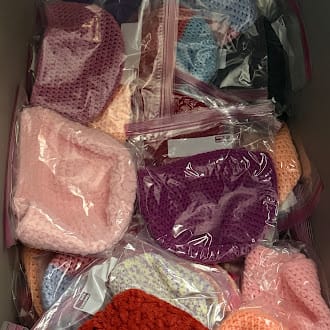 98 Hats, Two Blankets, and Lots of Sanity |
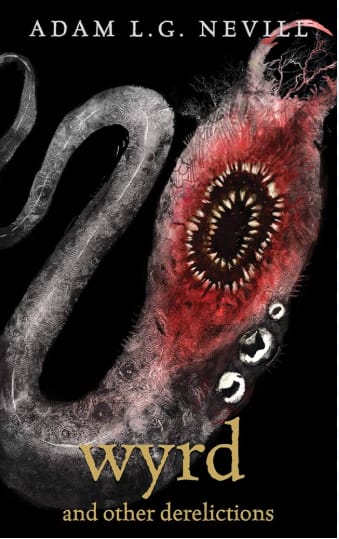
Wyrd and Other Derelictions
This book is dedicated to locations rather than characters. It’s an experiment, and something I find incredibly useful. How well can you describe a place, affected by humanity and the supernatural, but lacking their presence.
“Hippocampus”: 3.5. See above. Nevill wanted to capture the narrative effect of “found footage” without characters, and he accomplished that. He also hit up this story again in Wyrd and Other Derelictions in a reference to places that remain charged by the past even when we abandon them.
“Wyrd”: 3.5 A ritual Site with circles, sheep, tents, humans– who was this meant for? Maybe something that views all of these things from above. I’m having issues with the summaries on them because all of them are descriptions of eerie sites without characters. Useful for learning how to create an atmosphere. Terrible for reviewing anything. Anyway, dead people, animals and their detritus are a signal to the gods above. Probably
“Turning the Tide”: 3. Again with the tents. I’m almost sure Nevill had a tragic camping tent accident as a child. The scene describes an oceanside camping site that has gone dark and dank with hungry and murderous deeds of… something. The story focused quite a bit of the gore of an incident where nothing was left alive, so blood and guts studies abound for those needing them.
“Enlivened”: 4. A house in disarray, a ritual site left untended and open to places beyond ken. A cage unlocked, letting the monsters that waited at those doors out and about in this world, letting them slaughter their keepers. Almonds. Vetiver. Frankincense.
|  |
“Low Tide”: 3.5. Whether by tidal wave, rising waters, or some other influence from the deep, water has come over this coastal town and receded, leaving the eldritch and alien monstrosities of the deep to have a little treat for themselves. Nevill has an entire park of caravans here, but no tents. Extra points for the oceanic life, because giant jellyfish floating in the air and just slurping down people will not ever not be on my “ways to die, but cool” list.
“Hold the World in My Arms for Three Days and All Will Be Changed”: 3.5 The predecessor of All the Fiends of Hell, the world is on fire with the hellish pink/crimson light that hides beasts from the stars as they wreck devastation on the remaining population. It’s a nice little tidbit to accompany that story, made all the more satisfactory by the fact that I did read the book first, so I understood what it was describing. Given that it wasn’t as repetitive as the book, I also appreciated it a bit more.