- The Wuthering Cephalopod
- Posts
- Adam Nevill, Cries from the Crypt,
Adam Nevill, Cries from the Crypt,
And How Awful Elephant is as a Meal

JENNIFER Childs
November 21, 2025
The past few weeks have been a struggle. My pain levels were high, I received disappointing news about a application, and, and as the temperature dropped, all I wanted to do was stay in bed and wallow. If I wasn’t sleeping, I was reading. It was a good wallow. |  Damnit, Franklin |
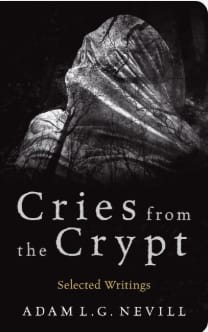
Cries from the Crypt
I’m handling this collection a bit differently from Nevill’s others. If I had thought about it more prior to getting halfway through formatting this on BeeHiiv, I would have saved it for last. Hindsight is a helluva could of, would of, should of though (of course, of = have, I’m not that damned bad).
Cries from the Crypt is a collection of stories, drafts, advice, and interviews Nevill originally offered as a free e-book. There’s not an easy way to quantify the quality of such work, especially since there is often a repeat of information across interviews or stories. I point out what’s relative to me, ranked what I could that wasn’t more specifically addressed elsewhere, and entered a kind Zen state with my OCD. For once.
“Forward”: The big explanation for the book. There’s a lot Nevill leaves on the cutting room floor, and these tidbits include interviews with advice, recommendations, and deleted scenes from other books. Since much of horror was underground during his early career, he wanted to offer material from that period for free, including a different ending for Apartment 16 and teaching notes.
“Little Bag’s Marrow”: 4. Kitty is a bitch. The kind of woman who brutalizes her employees. She rejoices and relishes the misery and cruelty she inflicts upon those who answer to her. However, HR has gotten involved, there’s a few lawyers, and Kitty has not only been told to get into anger management but to take some time away. One of her employees offers her respite at an old family cottage, but Kitty takes it as a cruel prank when she arrives. Which, yeah, cruel, but not a prank at all. They already buried one queen there. They’re happy to bury a second. Pretty damned solid short story, and I’m always about revenge and eating the rich.
“Interview 1”: This interview came post-Banquet for the Damned and pre-Apartment 16. It gets into how much of writing is being in the weeds. It’s always a process of reading, learning, reading some more, then finally determining what you have to say as a writer and how you want to say it so that people come back to your writing. He does recommend some books I now have in the TBR pile, such as the dissertation on horror by Peter Penzholdt. Mostly, creative careers ebb and flow, but you have to keep writing and learning despite that.
“Deleted Scene 1”: From Banquet of the Damned, Nevill deleted this scene as too cheesy, revealing one of the antagonists from the book as a bit too tangible for the influence it actually had. I agree with him: the cut was necessary as it was late 90’s horror cheese in all its glory, and that would have detracted from the groundwork laid by the more serious tone.
“Advice for Writers 1”: Much like “Interview 1” says, you’re going to be in the trenches. You write a book. You put it down and write short stories. You edit it again. You might spend years in drafts, in getting your name out there at conventions, and in finding your audience and publishers. Nevill’s not a fan of self-publishing, stating authors should seek out even a small publishing house and just keep at it until they get their writing there. Also, write dirty and ugly and shocking: that’s horror.
“A Book to be Buried With”: Back when Nevill was a young punk, his A levels meant he read Joyce’s Portrait of an Artist as Young Man. During a pivotal time in his life, the language of this book— and its themes of self-discovery/casting off the expectations of others— influenced him to become a writer.
“The Omen”: As a pre-teen, Nevill begged his mom to watch this film for its TV premiere (me, being old, remembers those still). He thought he was cool AF until the sexy, evil nanny hung herself for the anti-Christ. He considers the film a masterpiece of editing, religious iconography, music, and horror. If only we could all write like this film feels to a whole generation.
“Interview 2”: Post-Apartment 16, Nevill discusses generating ideas from the trials of creatives and the oppressed. He worked night shift at several locations dealing with the elderly, many of them wealthy, and their peculiarities inspired the book. He has a lot to say about traditional publishing, which he burned out on when he was an editor, and how horror has developed in the time in-between his books. Also, we get a hint of what The Ritual was in its idea stage. The best piece of advice is to use words that by themselves aren’t malevolent, but become so in the structure of the sentence, such as using the word wet over slimy. It fucks with people’s perceptions and makes things creepier.
|  Yo. I need at least 50% less of “She’s All That” from Apartment 16, man. |
“Interview 3”: Written during The Ritual, Nevill explains why he writes vaguely about the supernatural: he’s always writing from a character POV, so we only know what they know. While that’s obvious in some books (his alien invasion novel), it’s a good piece of info to take into others which feel more omniscient and less “this is what the character is seeing.” He also explains why The Ritual is a split narrative as an editor thought the characters spent too long in the woods. It’s validating to see that critics have some of the same issues I do, amateur as I am at anything.
“Deleted Scene 2”: A deleted scene from The Ritual features Luke crossing a bog to carry across supplies while the rest of his friends complain and make a fuss about the entire situation. It did prolong the “irritating” setbacks prior to the actual shit-ageddon ahead of them, and it didn’t add to the story. The cut makes sense and shows the nature of constant editing of even good writing.
“Interview 4”: Post-Last Days (one of my favorites), Nevill explains how we worship the sociopath. Meeting an actual cult leader is not a pre-requisite in knowing to know someone who could easily drive others to need them given money or the right PR. Coincidentally, I watched a documentary on cults at the same time I read this, and it came together for me. People, in retrospect, are always “Why did you follow a fucking sociopath into the abyss?” without recognizing those first steps before anyone knows the end. The best piece of advice from this was to make sure the beginning really sticks as a possibility, because then you can go off the rails at the end once you’ve already built up plausibility in the initial chapters.
“Advice for Writers 2”: Very similar advice to other interviews: use common wording for uncommon situations and let readers have imagination. Also, foreboding is an important tool in horror for building tension— all the signs and symptoms we explain away because of our situation or limitations that end up killing us.
“Interview 5”: House of Small Shadows had just come out, and Nevill reintroduced us to our childhood fear of old houses, puppets, and dolls with motives. The book was meant to be more weird fiction and build atmosphere, an exploration he wished he had done earlier. However, work and publishing contracts called, so he turned it in.
“Deleted Scene 3”: From No One Gets Out Alive, Nevill cut out huge swaths of the book as it was approaching 200k words. It’s a solid scene, but it feels like every detail could be a part of another scene without losing any of the story. It’s something I’ve wrestled with in my own writing: what needs to exist on its own and what can be part of something else and more effective as a result of that.
“Interview 6”: Mostly a retread of previous interviews, especially about the idea of sociopathy and portraying those villains as despicable rather than sympathetic.
This project took me longer than it really should have as a single crochet project, and a not insignificant amount of that time was spent on those fussy boarders and surface crochet. The only thing that should be left may be a few stray ends. At least there is 0% chance any of my soul will be trapped in it. |  I’m not even going to talk about how long even this shitty job took. |
“Deleted Scene 4”: The original beginning of Lost Girl, which became part of “Call the Name” and a later scene from the novel. The Lost Girl review was posted before, and the short story review is a bit later. Both use thematic elements of the devastation of climate change and the misery of those who will remain. I recognize parts of this chapter in the novel’s DNA, mostly the hotel scenes where the Father watches the news in-between hunting pedophiles.
“Apocalypse Right Now: Preoccupations of the End Game”: Like most of us from Nevill’s generation (or us elder millennials), we grew up with the horrors of the end of the world being around the corner. Later generations now face a when, and not the if of our fears, and the presence of the apocalypse is inescapable. Especially poignant as I sit here on our 30th day of heat advisories where I live. Because of that, we have a copious amount of material dealing with what happens after and Nevill didn’t think he had anything new to add to that. His goal with Lost Girl was to show the process of an apocalypse, the before where we rarely pay any heed to the signs that are obvious in hindsight.
“Deleted Scene 5”: Nevill removed this scene from Lost Girl because he thought the book was brutal enough without it. Lost Girl was a journey into masochism. I appreciated it as it gave me some ground work for my own writing and how dark I could get. It was this and Exquisite Corpse (Poppy Z. Brite) that really inspired a piece I’m working on dealing with female rage, witchcraft, and brutal revenge.
“Interview 7”: Post-Lost Girl, Nevill says the book was inspired by how he would process the loss of his own daughter as well as climate change. And climate change is really on his mind, as he researched the hell out overpopulation, fresh water shortages, and food shortages, combined with wars and genocide that force people into more crowded conditions. He also addresses the supernatural in the book, saying it was more True Detective than American Horror Story. That hits on what I said about the supernatural part of the book being out of place as it comes all at once rather than throughout.
“Advice for Writers 7”: An outline for a class, it explains what happened to the horror genre in the 90’s (it was subverted by crime and thriller books that hit the same note). However, Young Adult paranormal books opened a door, people got interested in zombie fiction because of television, and just the cyclical nature of interest. The best part of the advice here is learn how to refine and rewrite until you find your voice. Find a way to tell the story that is uniquely yours, using the stories, information, and trinkets that inspire you with details. People should know who they are reading, not because their name is on the cover of the book, but because they recognize voice.
“Estrus”: I don’t think Nevill likes living with roommates. Gareth, having lost his previous roommate to dreaded moving in with their girlfriend, has found a new one in the form of Mila. She’s grotesque and a mishmash of features that make her repellent. Gareth especially dislikes her because she seems to occupy all of the spaces he needs to use and stashes food, causing a mouse problem. It also doesn’t help that she brings a different man home a few times a week, and while they disappear by morning, she howls insanely in the sack. Given that it’s Nevill, this situation doesn’t end well. I expected it, but I had read every other thing on this list by then.